
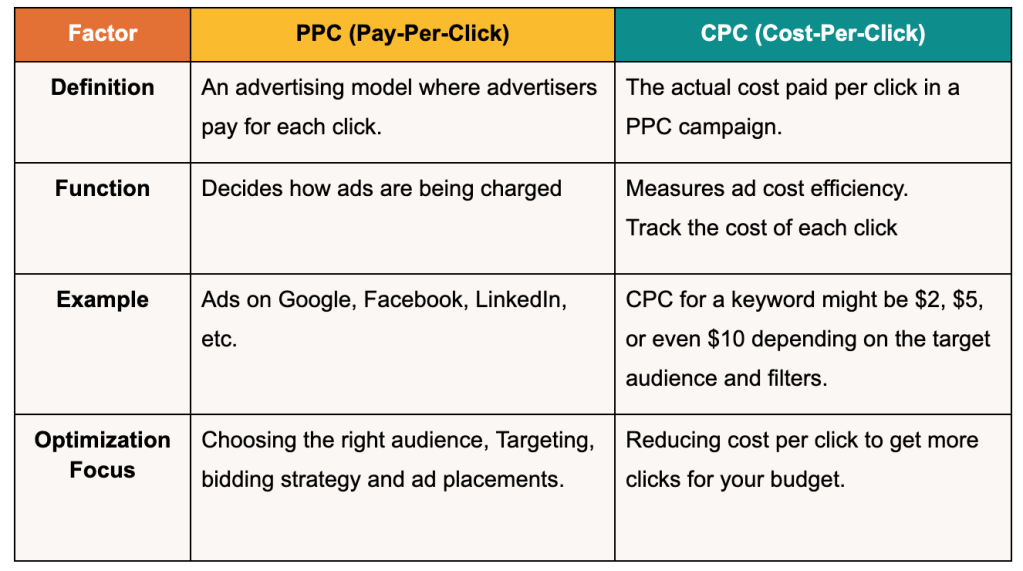
If you’re in digital marketing, you’ve come across the terms PPC (Pay-Per-Click) and CPC (Cost-Per-Click). Many people use them interchangeably, but they’re not the same.
So, what’s the difference? How do you use them in advertising? And why does CPC matter in PPC campaigns? Let’s break it all down in simple terms.
What is PPC?
In marketing, PPC stands for Pay-Per-Click. It is a digital advertising model where advertisers pay a fee each time someone clicks on their ad. It’s commonly used on platforms like Google Ads, Facebook Ads, LinkedIn Ads, Amazon Ads, Microsoft Advertising (Bing Ads), Instagram Ads and YouTube Ads.
How does PPC Work?
- Advertisers create ads and choose targeting options (Keywords, Audience, Location, etc.)
- Users see the ads when they search for something (Google Search Ads) or browse online (Social Media & Display Ads)
- If the user clicks, the advertiser pays a fee (hence “pay-per-click”)
- Advertisers monitor CPC (Cost Per Click) to optimize their campaigns.
What is the purpose of PPC advertising?
Pay-per-click (PPC) advertising drives traffic to websites, increases brand visibility, targets specific audiences, generates leads and sales and converts visitors into customers. It also allows companies to compete with larger brands, adapt to market trends, and optimize campaigns for better results.
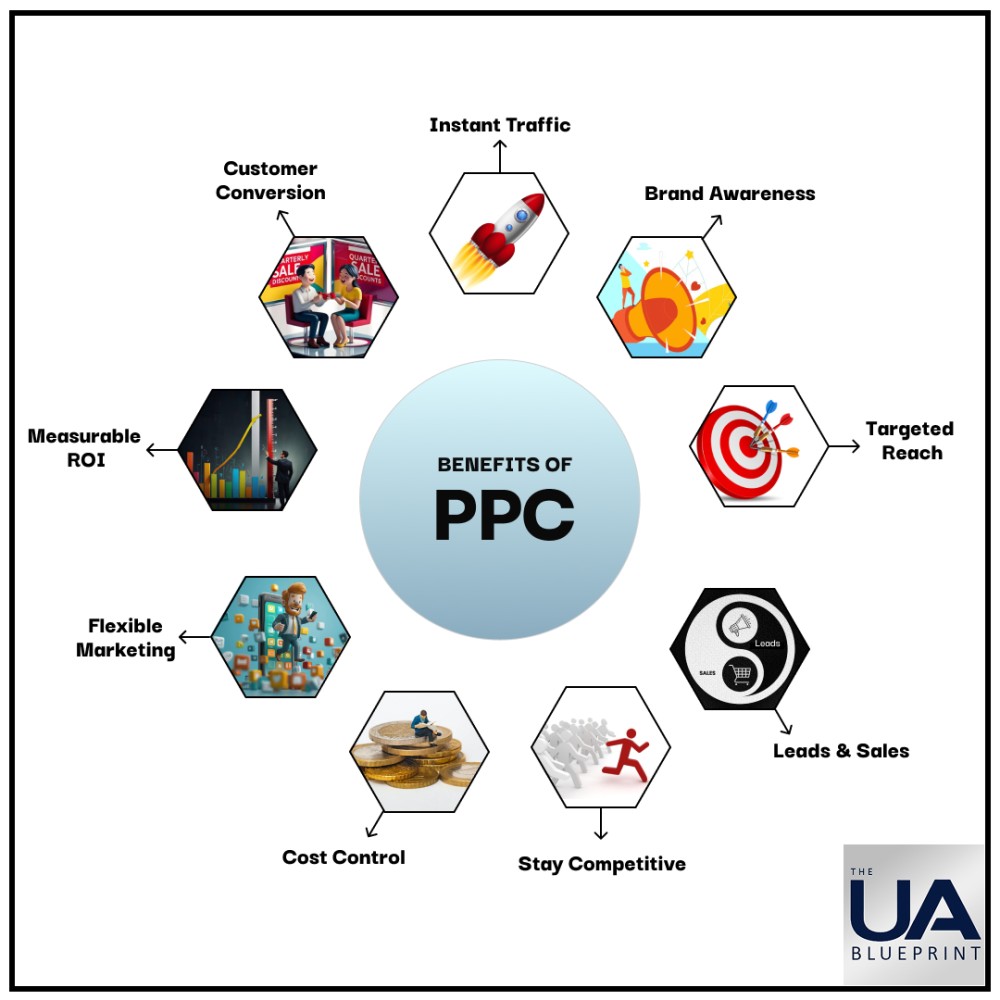
What are the benefits of PPC campaigns?
- Instant Traffic – Get quick results
- Brand Awareness – Increase branding and visibility
- Targeted Reach – Show ads to the right audience
- Leads and Sales – Drive conversions leads to sales
- Customer Conversion– Converting visitors into buyers
- Cost Control – Controlling advertising budget
- Measurable ROI – Tracking, Measuring and Optimizing campaign performance
- Stay Competitive – Compete with big brands
- Flexible Marketing – Supporting marketing campaigns
What are the types of PPC advertising?
- Search Ads: Appear on search engines based on keywords.
These aretext ads that appear on Google and Bing when someone searches for something. For example, if you search “best running shoes,” the top results might be ads from brands like Nike or Adidas. Advertisers pay when someone clicks their ad.
- Display Ads:
These arebanner ads that appear on various websites through the Google Display Network (GDN). They can be images, animations, or interactive ads shown on news sites, blogs, and apps.
- Social Media Ads:
These are ads thatappear in user’s feeds on platforms like Facebook, Instagram, LinkedIn, TikTok, and Twitter. They look like regular posts but are sponsored. These ads help businesses reach specific audiences based on interests, location, and behaviour.
- Shopping Ads: Product-based ads
These areproduct-based ads used in e-commerce. For example, when you search for a product on Google, you see product images, prices, and store names at the top of the search results. These ads run on Google Shopping and Amazon Ads to promote online stores.
- Video Ads: Ads on YouTube
These are ads thatplay before, during, or after videos on YouTube. Some are skippable, while others require a few seconds before skipping. Advertisers pay per click (PPC) or per view (CPV – Cost Per View).
- Native Ads: Sponsored ads
These areads that look like regular content on websites. They blend naturally with articles, blog posts, or news stories. For example, if you’re reading a news article, you might see “Recommended Articles” or “You May Also Like” with sponsored links from platforms like Taboola or Outbrain.
- Gmail Ads: Ads that appear inside Gmail are usually at the top of the inbox as a promotional email.
- Remarketing Ads: Retargeting
Ads that target people who have already visited your website, reminding them to return and take action like completing a purchase.
- Amazon Ads: Promote products on Amazon
These areadvertisements that appear on Amazonwhen people search for products. Sellers and brands pay to promote their items at the top of search results or on product pages to attract buyers.

How to create a PPC campaign?
- Define your goals: Website traffic, generating leads, boosting, and brand awareness.
- Choose your PPC platform:Choose where your target audience spends their time. Select the platform where you want to run PPC ads. Eg: Google ads, Facebook ads, Bing ads, Linkedin etc.
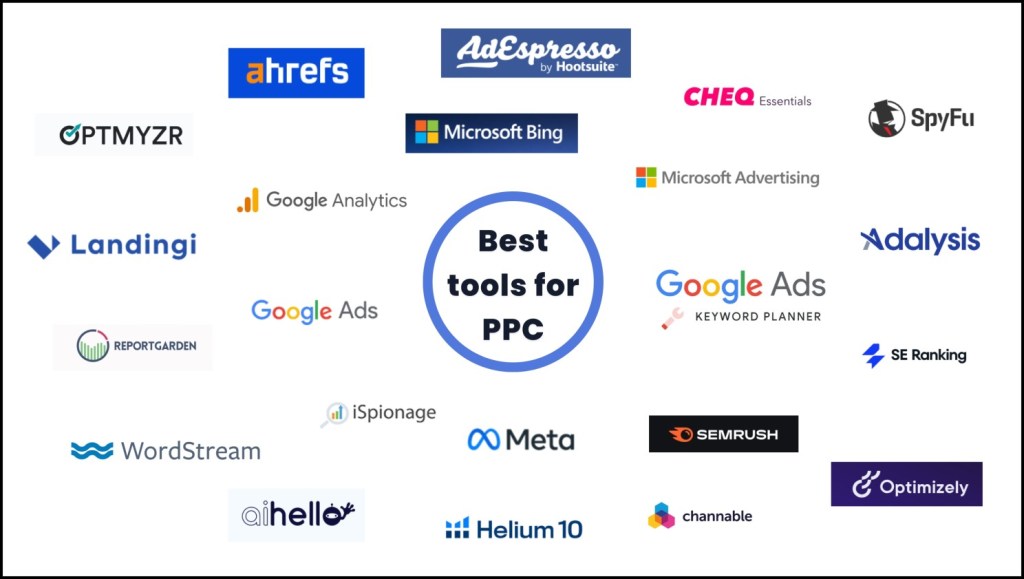
- Conduct keyword research: Identify relevant keywords, Use keyword research new tools like Google Keyword Planner, Ahrefs, and Semrush, to find keywords.
- Bid & Budget: Allocate the campaign budget across ad groups and keywords. Set up bid amount on a daily or monthly basis
- Ad copies:The ad should have a clear headline, description and call to action ( CTA )
- Effective landing page:Create dedicated landing pages for each ad & ad group.
- Tracking & analytics: Implement tracking links and codes in the campaigns. Set up goals to track and measure key metrics.
- Launch:after everything is setup, it is time to launch campaigns ( make live )
- Monitor & optimize:Review campaign performance (KPIs) daily basis
- A/B testing:Experiment with different ad copies, keywords, landing pages, bids, keywords, and landing pages.
- Scale it:After collecting the data, refine your campaigns to scale.

What is CPC? What does it stand for?
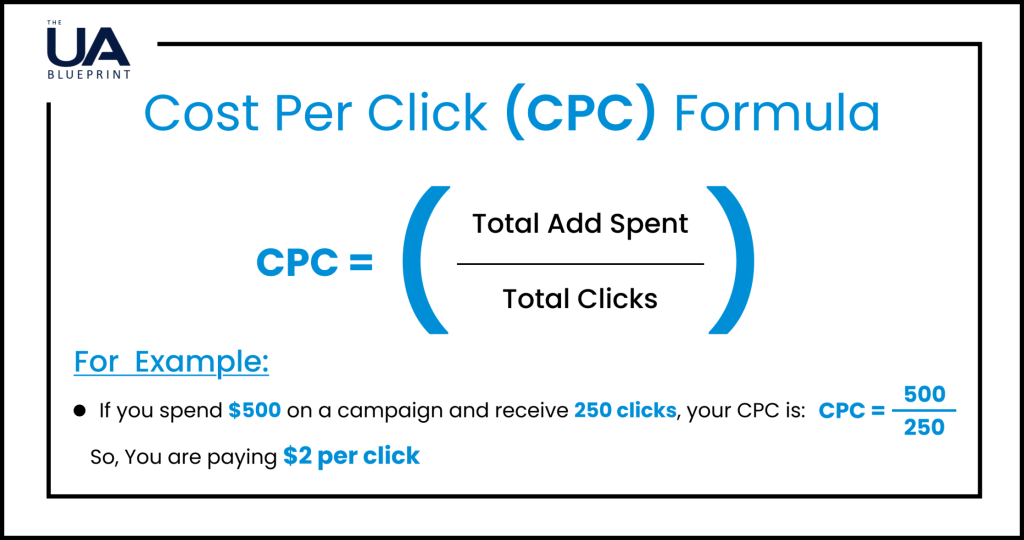
CPC stands for Cost-Per-Click, CPC is a pricing metric that tells you how much you’re paying for each click in a PPC campaign.
What is the CPC Formula?
CPC = ( Total cost of clicks / Number of clicks )
CPC is important because it affects your ROI (Return on Investment).
A lower CPCmeans you get more clicks for the same budget.
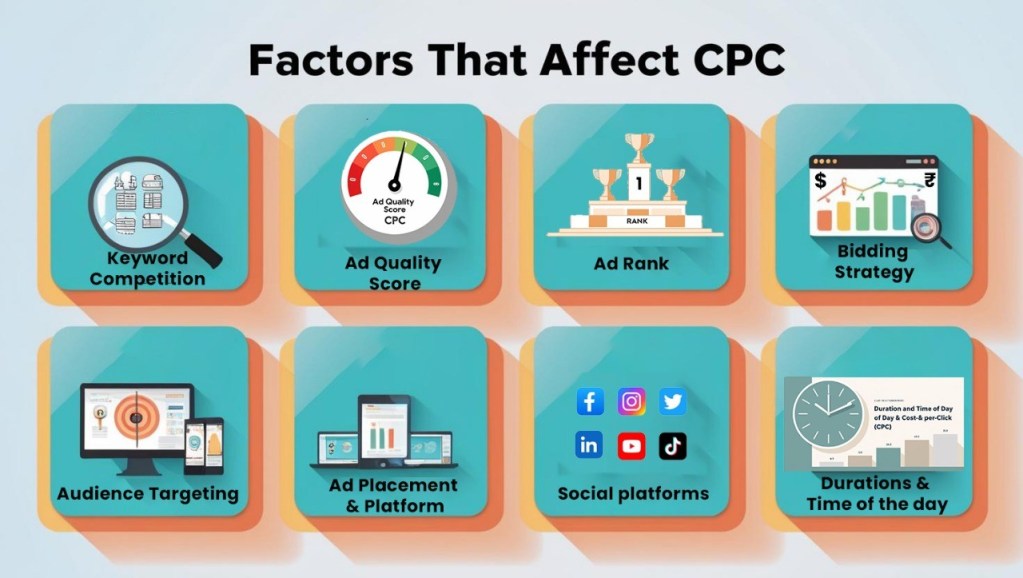
What are the factors that affect CPC:
📌 Keyword Competition– High-demand keywords have a higher CPC. More competition leads to higher CPCs.
📌 Ad Quality Score (Google Ads)– Better ad relevance and landing page experience lower CPC, that is how Google Ads rates your ad.
📌 Ad Rank – Your ad’s position relative to other ads.
📌 Bidding Strategy – Manual CPC & Automated Bidding affects costs.
📌 Audience Targeting – The more specific your targeting, the higher the CPC.
📌 Ad Placement & Platform – Where your ad appears, such as in a newsfeed or sidebar. Google Search Ads usually have higher CPCs than Facebook Ads.
📌 Social platforms – Different social media platforms charge different rates.
📌 Durations & Time of the day:How many other businesses are competing to run ads at the same time.
Where Do You Use PPC & CPC in Digital Marketing?
- Google Ads (Search & Display): PPC model with CPC bidding.
- Facebook & Instagram Ads: Advertisers choose CPC (Pay-Per-Click) or CPM (Cost Per 1000 Impressions).
- LinkedIn Ads (High CPC Platform): Used for B2B lead generation, with CPCs often $5-$15 per click.
- YouTube Ads (Video PPC): Advertisers pay per click (CPC) or view (CPV)
- Amazon Sponsored Ads (E-commerce PPC): Uses CPC bidding for product listings.
- Native Advertising (Taboola, Outbrain): PPC model with CPC ranging from $0.10 to $2.00 depending on the audience.

How to Optimize CPC in PPC Campaigns?
✅ 1. Improve Quality Score (Google Ads)
- Write relevant ad copy.
- Optimize landing pages.
- Increase Click-Through Rate (CTR).
✅ 2. Use Long-Tail Keywords
- Example:Instead of bidding on “shoes” bid on “men’s running shoes”.
- Lower competition = Lower CPC.
✅ 3. Test Different Bidding & Budget Strategies
- Manual CPC – Gives control over bids.
- Enhanced CPC – Google adjusts bids based on conversion probability.
- Target ROAS (Return on Ad Spend) – Focuses on maximizing revenue.
- Budgeting involves setting daily or monthly budgets to control overall ad spend.
✅ 4. A/B Test Ads & Creatives
- Try different ad copy, CTAs, images, and formats to improve performance.
✅ 5. Optimize Audience Targeting
- Exclude irrelevant locations, age groups, or intereststo reduce wasted spend.
Key Takeaways:
✅ PPC is the advertising model, and CPC is the cost-per-click metric used in PPC campaigns.
✅ CPC helps measure PPC efficiency – A lower CPC means more clicks for the same budget.
✅ Google Ads, Facebook Ads, LinkedIn Ads, Amazon Ads, and YouTube Ads all use PPC models with CPC bidding.
✅ Optimize PPC by improving ad quality, using proper keyword strategies, and testing different bidding models.
Want to maximize your PPC campaigns and reduce CPC? Start optimizing today!
I’d Love Your Feedback!
📩 Feel free to reach out to me at kiran.malla@yesgnome.com or connect with me on Kiran Malla
Did you find this Newsletter helpful? Share your thoughts in the comments! If you have any questions, feel free to ask – I’d be happy to help!




Unlocking tomorrow’s hits today: Trend insights , market research and ideation services for game studios.