What Actually Separated Winning Hybrid Casual Games in 2025
We’ve shared the key slides from Supersonic (Unity) that break down how the hybrid casual space evolved in 2025. Rather than repeating the presentation, this post focuses on what really changed—and why it mattered.
In short: hybrid casual stopped being about installs and started being about durability.
Studios that won didn’t chase short-term CPI wins. They built deeper core loops, invested in retention beyond Day 1, and treated UX, difficulty tuning, and monetization as connected systems—not isolated features.
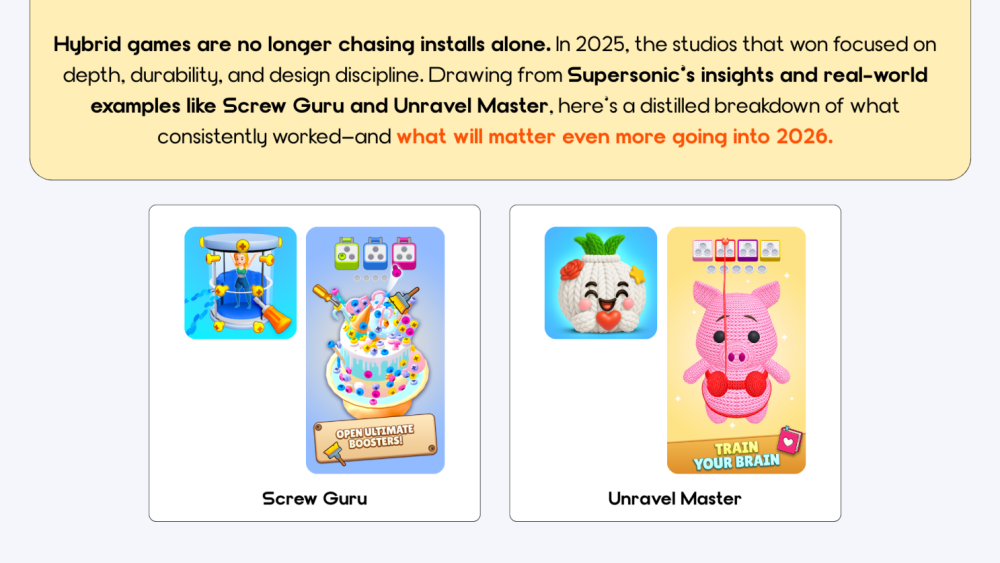
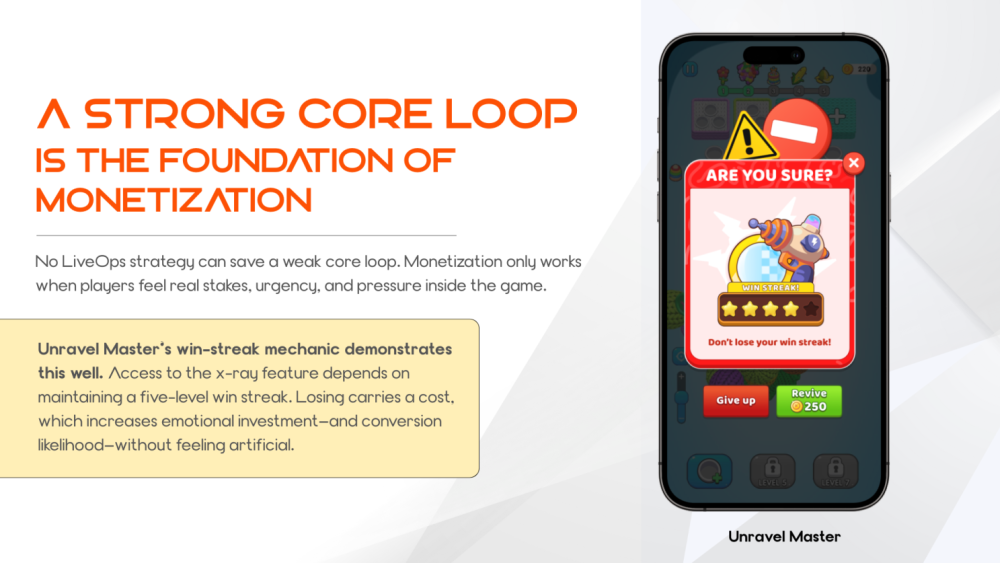
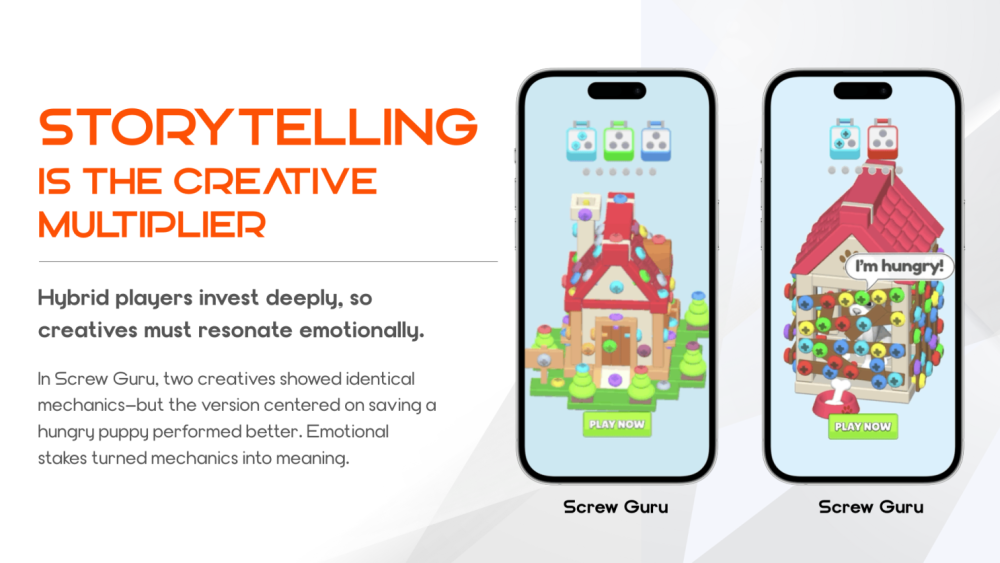
The examples highlighted in the deck, including breakout performers like Screw Guru and Unravel Master, show that ~30% D7 retention is no longer an outlier when design discipline is right. These weren’t louder games—they were more thoughtful ones.
What you’ll learn:
How performance metrics shifted from CPI to ROAS and mid-term retention
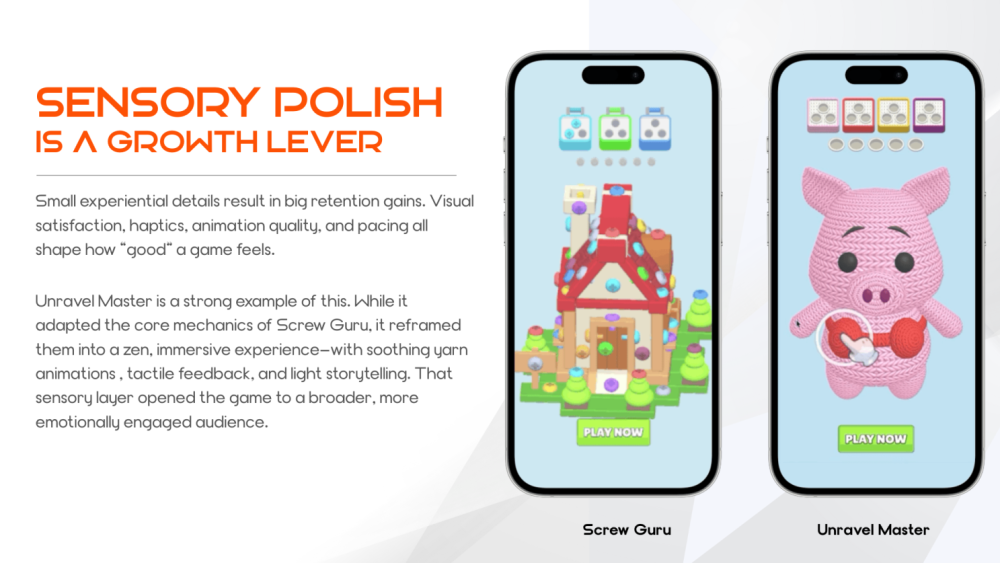
Why sensory polish and pacing became growth drivers, not nice-to-haves
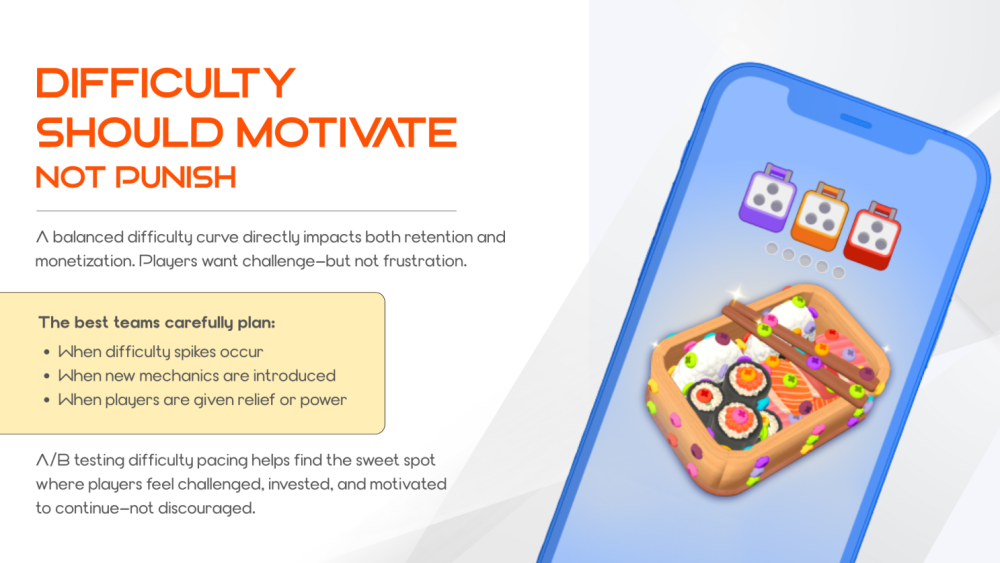
How difficulty balance directly impacted motivation and churn
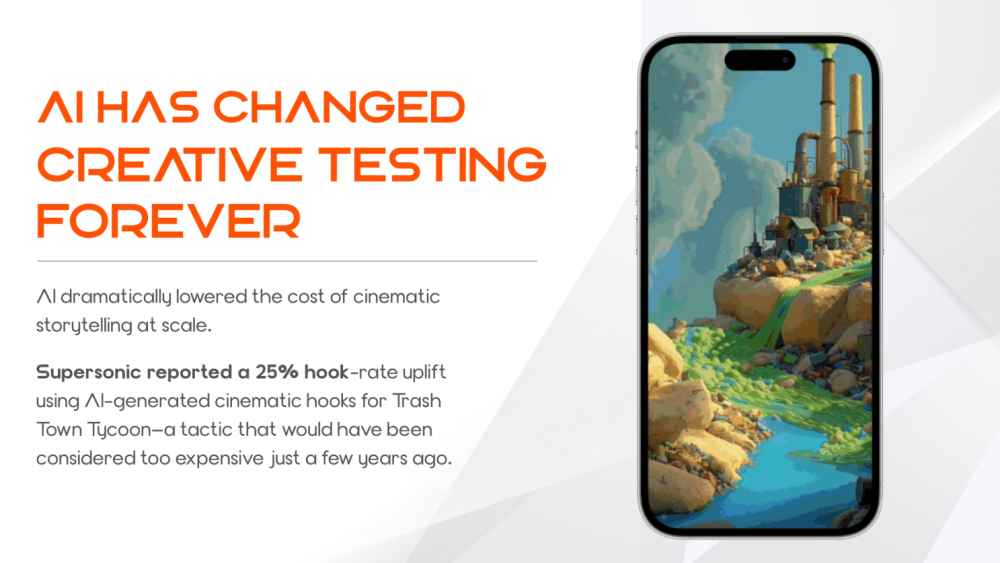
Where AI entered production, speeding up creative testing and storytelling
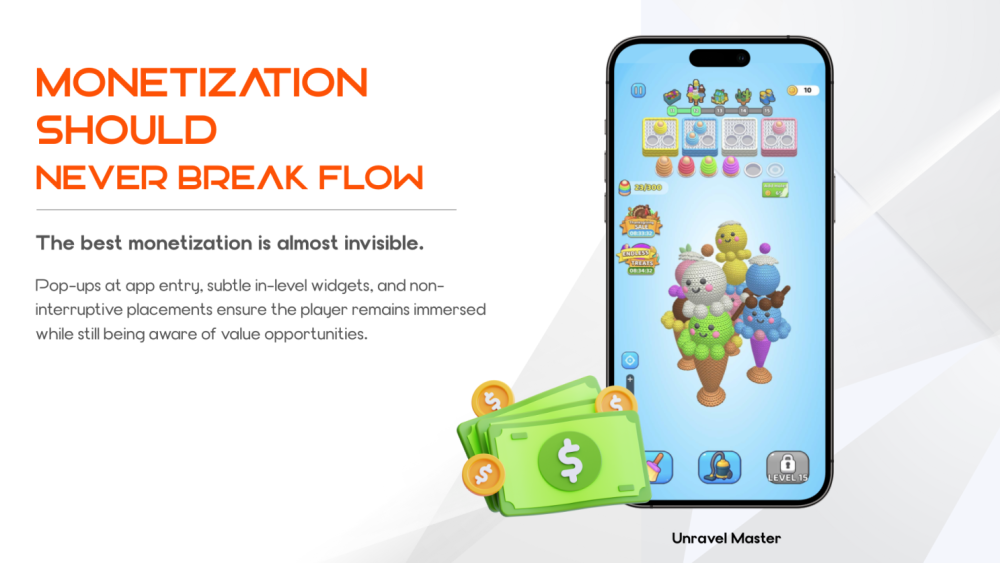
Why monetization that respects player flow consistently outperformed aggressive tactics
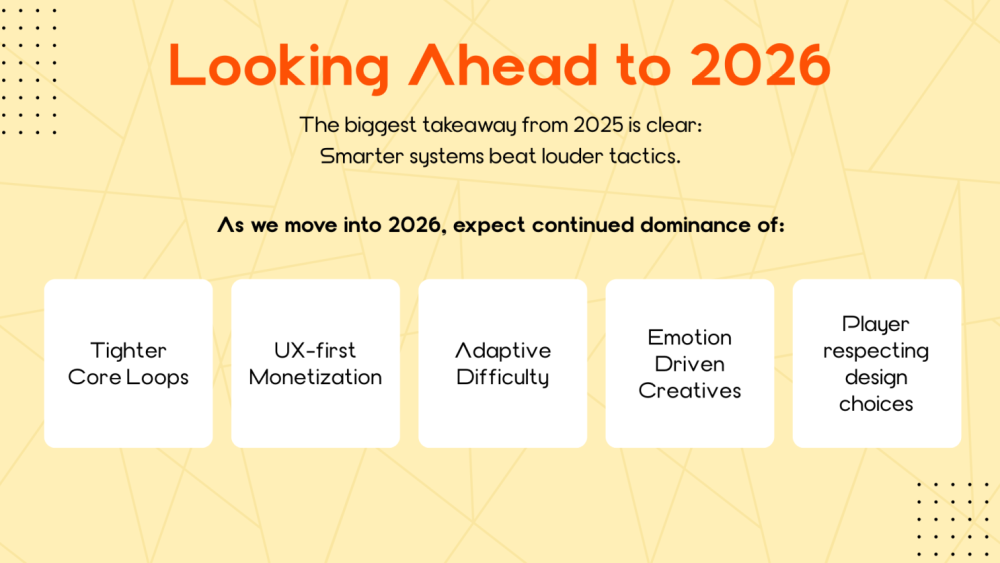
The reality in 2025: smarter systems beat brute force.
And heading into 2026, the teams winning hybrid casual are the ones building player-respecting experiences that last.
🔍 Want deeper insights?
➡ Follow NextBigGames mes for market research, industry trends, and hybrid-casual gaming analysis.
➡ Follow NextBigAds for daily UA breakdowns, ad creatives, and scaling hacks.
➡ Connect with me, Vamsi Penmetsa (vamsi@nextbiggames.com) for customized reports tailored to your needs and requirements.